
Not every impactful hackathon needs a Fortune 500 sponsor or a massive marketing budget. Some of the most meaningful hackathons in India are organized by communities, colleges, and passionate individuals who believe in the power of building together for a cause.
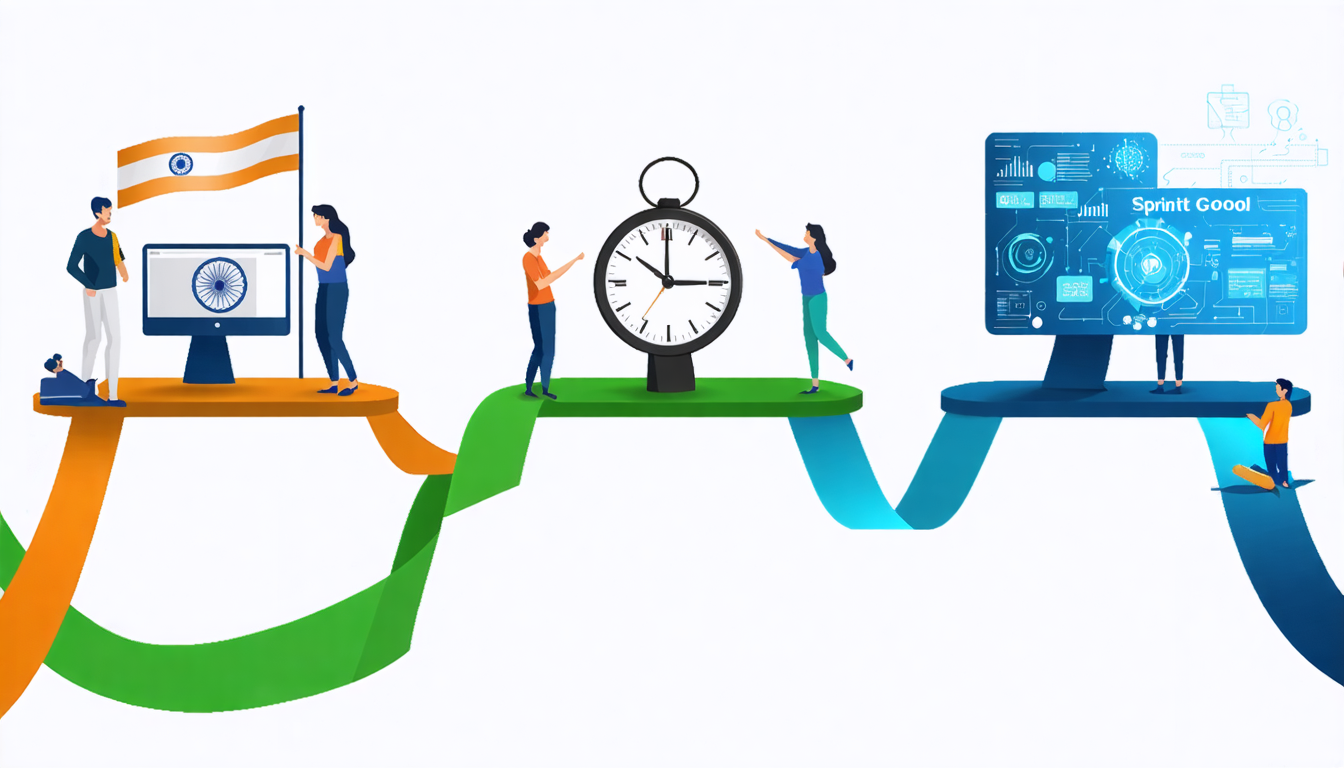
Three community hackathons on Reskilll — AINNOVATION II (Code4Bharat), TechJam 2.0, and Sprint4Good AI Hackathon — demonstrate what happens when grassroots energy meets solid infrastructure. Together, they attracted nearly 2,500 teams and produced solutions ranging from accessible AI tools to national-scale digital infrastructure for India.
AINNOVATION II: Code4Bharat — A National Innovation Movement
“One Code. One Nation. Infinite Impact.”
Launched on India’s 78th Independence Day (August 14, 2025), AINNOVATION II was more than a community hackathon — it was a national-level innovation movement. Envisioned by Kyndryl and running through November 2025, the Code4Bharat event attracted 1,441 teams united by a single vision: building a self-reliant and digitally advanced India.
The Code4Bharat Vision
The name itself — Code for Bharat — captured the spirit of the event. This wasn’t about building the next startup or winning prize money. It was about using technology to serve the nation, addressing India-specific problems at a scale that matters.
Problem statements covered the areas where India needs innovation most urgently:
- Digital governance — making government services accessible, efficient, and transparent for all citizens, not just the tech-savvy
- Healthcare access — bringing medical expertise and diagnostic capabilities to underserved rural and semi-urban areas
- Agricultural technology — helping India’s 150 million farming families with data-driven decisions on crops, weather, markets, and resources
- Education equity — ensuring quality education reaches every student regardless of geography, language, or economic background
- Financial inclusion — bringing banking, insurance, and financial services to the hundreds of millions who remain unbanked or underbanked
- Environmental sustainability — technology solutions for waste management, water conservation, and renewable energy adoption
The Scale and Diversity of Participation
1,441 teams is a massive number for a community-driven hackathon — larger than many corporate-sponsored events. The participation reflects both the appeal of the Code4Bharat mission and the reach of Reskilll’s platform with its 7M+ registered innovators.
Participants came from across India — engineering colleges in metro cities and small towns, working professionals contributing their expertise on weekends, independent developers passionate about civic technology, and student teams experiencing their first hackathon. The Independence Day launch gave the event a patriotic energy that motivated teams to think beyond personal projects and toward national impact.
What Made Code4Bharat Special
Several factors set AINNOVATION II apart from typical hackathons:
- Mission over prizes — while prizes existed, the primary motivation was contributing to India’s digital transformation
- Extended timeline — running August through November gave teams time to build substantial solutions, not just weekend prototypes
- Real-world problem statements — challenges sourced from actual government and social sector needs
- Community ownership — organized by the community, for the community, with Reskilll providing the platform infrastructure
TechJam 2.0: The One-Day Innovation Sprint
If AINNOVATION II was a marathon, TechJam 2.0 was a sprint — and it proved that you don’t need days or weeks to create something meaningful. Running October 9-31, 2025, this one-day innovation event brought together 528 teams of coders, creators, and changemakers for an intense burst of building.
The Sprint Format
TechJam 2.0 was designed for maximum intensity and minimum barrier to entry. Over 200+ participants gathered for a single day of:
- Hands-on coding sessions — not presentations or lectures, but actual building time with keyboards and screens
- Rotating mentorship rounds — experienced developers circulating among teams, providing targeted guidance on technical challenges
- Real-world problem statements — challenges sourced from actual industry needs, not academic exercises
- Demo presentations — every team presented their solution to judges, practicing the critical skill of communicating technical work
- Instant feedback — judges provided immediate, constructive feedback that teams could learn from
Following the success of TechJam 1.0, the second edition was bigger, bolder, and smarter — incorporating lessons learned from the first edition to create a tighter, more impactful experience.
Why One-Day Community Hackathons Work
Not everyone can commit to a week-long hackathon or even a full weekend. One-day events lower the barrier to entry dramatically:
- Students can participate without missing classes — a Saturday event fits into any academic schedule
- Working professionals can join without taking leave — no need to explain to your manager why you need three days off
- First-timers feel less intimidated — committing to one day is much less scary than committing to 48 hours
- The time pressure drives creativity — with only hours to build, teams focus on the core idea and execute ruthlessly
The constraint of a single day also teaches one of the most valuable skills in software development: ruthless prioritization. Teams learn to identify the one core feature that matters, build it well enough to demo, and present it effectively — all in a few hours. This is exactly how product development works at fast-moving companies.
Sprint4Good AI Hackathon: Making AI Accessible for Everyone
The Sprint4Good AI Hackathon (December 2025 – January 2026) tackled one of AI’s most important and often overlooked challenges: ensuring that AI benefits everyone, not just those with resources, connectivity, and technical literacy.
The Problem Sprint4Good Addressed
AI is rapidly transforming industries and creating enormous value. But access to AI tools, infrastructure, and expertise remains unevenly distributed — both globally and within India. The Sprint4Good community hackathon asked a pointed question: how do we build AI that is accessible, inclusive, and affordable?
With 526 teams participating in this 12-hour, high-intensity online hackathon, the response demonstrated that India’s developer community cares deeply about AI equity and is willing to build solutions for it.
What Teams Built for AI Accessibility
Solutions focused on three pillars of making AI work for everyone:
Affordable AI Tools
Teams built lightweight AI applications that run on basic smartphones without requiring cloud connectivity or expensive hardware. Solutions included:
- On-device AI models that work without internet
- Compressed models optimized for low-RAM devices
- SMS-based AI interfaces for feature phones
- Shared-device solutions for community access points
Inclusive AI Design
Solutions designed for people who are typically excluded from AI benefits:
- AI tools for people with visual, hearing, or motor disabilities
- Regional language AI interfaces (not just Hindi and English, but Tamil, Telugu, Kannada, Bengali, and more)
- Low-literacy interfaces using voice and visual cues instead of text
- Solutions that work in low-connectivity environments common in rural India
AI Education and Literacy
Tools that help non-technical people understand and use AI in their daily lives:
- AI literacy platforms in regional languages
- Interactive tutorials that teach AI concepts through practical examples
- Tools that demystify AI decision-making for end users
The 12-Hour Sweet Spot
Sprint4Good used a 12-hour format — longer than TechJam’s one-day sprint but shorter than a traditional 48-hour hackathon. This format hits a sweet spot: teams have enough time to build something meaningful and polished, while the time pressure maintains the energy and urgency that makes hackathons exciting and productive.
What These Community Hackathons Have in Common
Despite their different themes, formats, and timelines, these three events share important characteristics that make them effective:
Mission-Driven, Not Prize-Driven
None of these community hackathons were primarily about winning prize money or building the next startup. They were about solving problems that matter — for India’s digital future, for innovation culture, for AI accessibility. The mission attracted participants who were intrinsically motivated, which consistently produces better solutions.
Community-Organized with Authentic Energy
These events were organized by communities and institutions, not corporate marketing departments. The passion and authenticity showed in every aspect — from the problem statements that addressed real needs to the mentorship quality to the participant experience. Community hackathons have a different energy than corporate ones, and participants feel it.
Platform-Enabled for Scale
All three ran on Reskilll’s platform, which handled the operational complexity — registrations, team management, submissions, evaluation — so organizers could focus entirely on the participant experience. With 92,403 total team registrations across 196 hackathons, the platform is built for exactly this kind of event at any scale.
The Bigger Picture: India’s Grassroots Innovation Movement
India’s tech ecosystem isn’t just built in corporate offices, startup incubators, and IIT labs. It’s built in community hackathons like these — where students write their first real application under time pressure, where professionals experiment with new technologies outside their day jobs, and where communities come together around shared problems that matter.
The numbers tell the story of a grassroots movement:
- AINNOVATION II (Code4Bharat): 1,441 teams building for India’s digital future
- TechJam 2.0: 528 teams in a one-day innovation sprint
- Sprint4Good: 526 teams making AI accessible for all
That’s nearly 2,500 teams — thousands of developers — building solutions for real problems in just three events. Multiply that across the 196 hackathons on Reskilll, and you start to see the true scale of India’s grassroots innovation movement.
Want to Organize or Participate in a Community Hackathon?
Whether you want to organize a community hackathon for your college, company, or local developer community — or participate in one — Reskilll makes it straightforward.
The platform handles the logistics, MentorVerse provides access to 1,389+ experienced mentors, and the community of 7M+ innovators provides the participants. You bring the mission and the energy.
TechJam 2.0 was my first hackathon ever. The one-day format was perfect for someone who was nervous about committing to a full weekend. Built a simple but working project, presented to judges, and got hooked. Now I have done 4 more hackathons since then.
The Sprint4Good focus on AI accessibility really stood out. Our team built a voice-based AI assistant that works on basic feature phones — no smartphone needed. The 12-hour format was the perfect balance of intensity and feasibility.
Code4Bharat was special because it felt like we were building for something bigger than a prize. The Independence Day launch gave it a patriotic energy that motivated everyone. 1,441 teams is massive for a community-driven event.